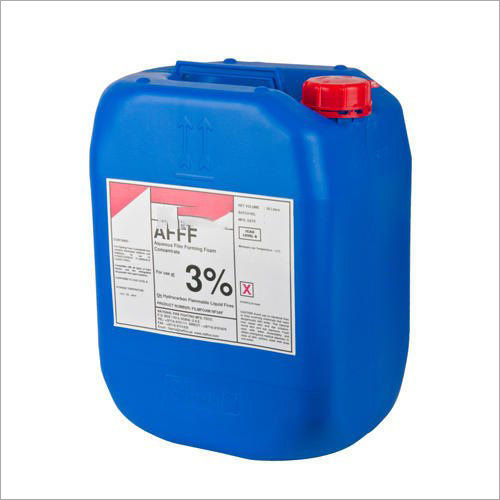
About Aqueous Film Forming Foam Concentrate
Technical Specification
|
PH
|
6.5 -8.5
|
|
Specific Gravity
|
1.00 - 1.12
|
|
Miscibility with Water
|
Miscibility
|
|
Viscosity
|
Max 10 cst
|
|
Sludge Content
|
Max. 0.25%
|
|
Freezing Point
|
-Zero
|
|
Film Formation
|
Forms Films
|
|
Expansion
|
>6
|
|
25% Drainage Time
|
Conform to Relevnt Standard
|
|
Fire Extinction Time
|
Conform to Relevnt Standard
|
|
Burnback Resistance
|
Conform to Relevnt Standard
|
|
Packing
|
540 ml. / 2.7c. / 20c. Plastic Containers
|
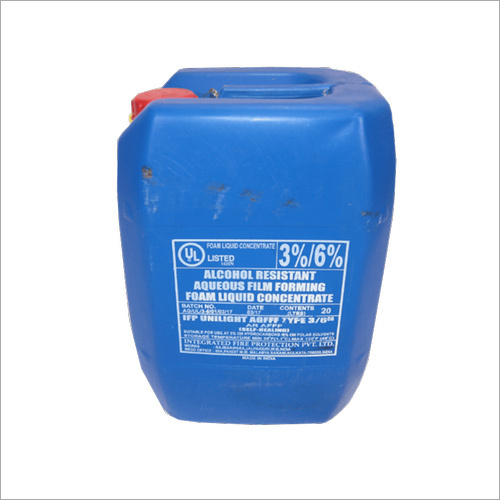
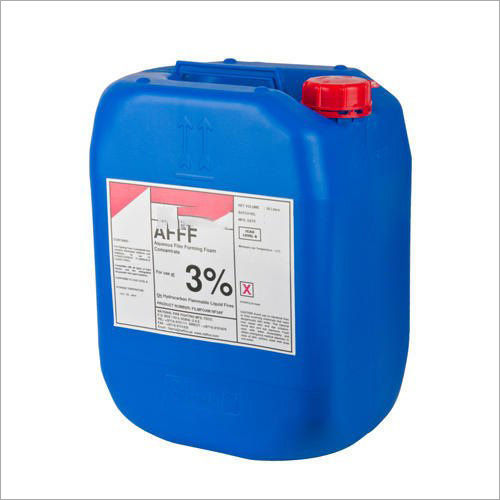
Efficient Fire Suppression TechnologyAFFF forms a robust aqueous film on hydrocarbon fuel surfaces, rapidly suppressing vapors and flames. By producing a resilient foam layer, it prevents re-ignition and enhances firefighter safety during operations on Class B liquid fires. Its unique properties allow for swift deployment using standard firefighting equipment.
Environmentally Conscious and VersatileThe foam concentrate is non-toxic, biodegradable, and entirely soluble in water. Suitable for application with fresh or sea water, it aligns with modern firefighting protocols. Its compatibility with dry chemical agents ensures multifunctional usage without compromising effectiveness or safety.
FAQ's of Aqueous Film Forming Foam Concentrate:
Q: How is Aqueous Film Forming Foam Concentrate (AFFF) applied during fire emergencies?
A: AFFF is proportioned at 3% or 6%, mixed with water, and deployed using conventional firefighting equipment such as foam nozzles or monitors. It can be used with either fresh or sea water and is suitable for tackling Class B hydrocarbon fuel fires.
Q: What are the benefits of using AFFF for firefighting?
A: AFFF offers fast flame knockdown and vapor suppression by forming a film over fuel surfaces, minimizing re-ignition. Its non-toxic, biodegradable formulation is safe for responders and the environment. It is easy to apply and provides reliable performance over a long shelf life.
Q: Where can AFFF be used effectively?
A: AFFF is designed for use on Class B hydrocarbon fuel fires, commonly found in industrial settings, storage facilities, refineries, transportation hubs, and airports. Its flexibility allows for use with fresh or sea water and integration with other extinguishing agents.
Q: What process ensures the correct foam expansion ratio during application?
A: Proper foam expansion (typically 6:1 to 12:1) is achieved by adhering to recommended proportioning rates and applying the foam through appropriate discharge devices, ensuring optimal coverage and vapor suppression on fuel surfaces.
Q: Is AFFF compatible with other fire extinguishing agents?
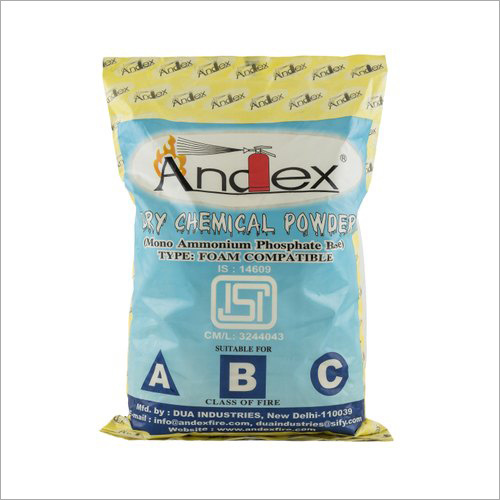
A: Yes, AFFF is compatible with dry chemical extinguishing agents, allowing simultaneous or sequential use during firefighting operations without adverse interaction.
Q: How should AFFF be stored to maintain its shelf life?
A: For optimal shelf life (minimum 10 years), AFFF should be stored in original containers at temperatures between 0C to 49C (32F to 120F) and protected from contamination. Follow manufacturer's guidelines for best preservation.




 English
 Spanish
 French
 German
 Italian
 Chinese (Simplified)
 Japanese
 Korean
 Arabic
 Portuguese
 Send Inquiry
 Send Inquiry